
How to Prep Your Trees Before Monsoon Season
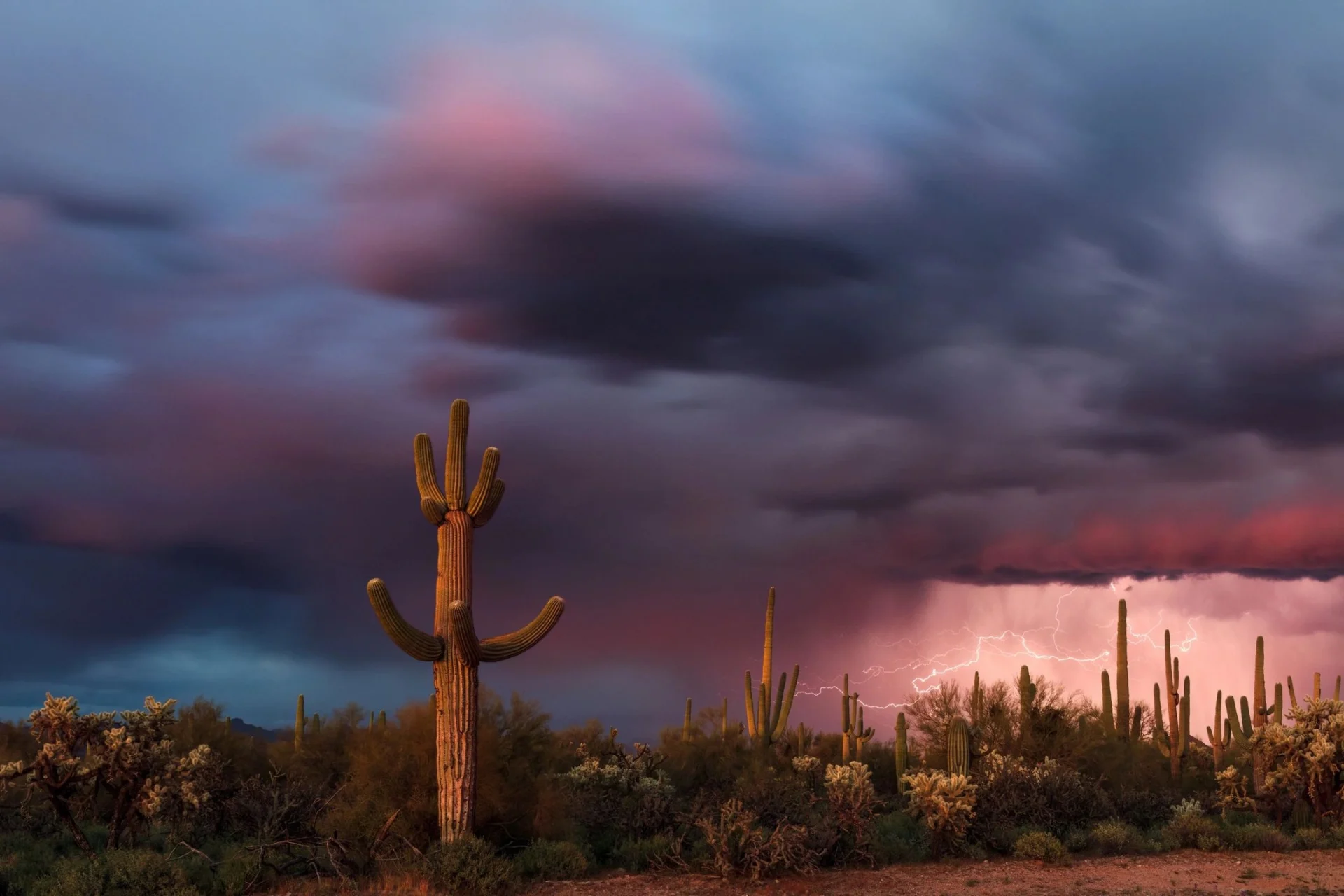
Tucson’s monsoon season brings intense winds and sudden downpours. Here’s what to do in May and June to reduce the risk of branch failure, root damage, and emergency calls.
Tucson’s monsoon season (June through September) is the most dangerous time of year for trees. High winds, saturated soil, and sudden temperature drops create the perfect conditions for branch failure and uprooting — especially in trees that haven’t been properly maintained.
Start with a professional inspection. Before the first storm hits, have a certified arborist walk your property. They’ll identify dead wood, co-dominant stems, and weak branch unions that are likely to fail under load.
Crown thin, don’t top. A common mistake is topping trees to reduce wind resistance. This actually makes trees more dangerous — it stimulates dense, weakly attached regrowth. Crown thinning removes interior branches to let wind pass through, reducing sail effect without compromising structure.
Check for root zone issues. Compacted soil, recent trenching near the drip line, or construction activity can weaken root systems. A tree that looks healthy above ground may be structurally compromised below.
Remove dead wood now. Dead branches are the first to fall in a storm. They’re easy to spot in late spring — no new leaf growth, brittle bark, and a hollow sound when tapped.
Don’t overwater. Many homeowners increase irrigation before monsoon season, which is counterproductive. Saturated soil reduces root anchorage. Cut back irrigation in June and let the monsoon rains do the work.
If you’re unsure about the condition of your trees, call us before the season starts. A pre-monsoon inspection is one of the best investments you can make in your property.